Abstract
This research examines the role, history, and contemporary situation of female artisans in northern Palestine, a region encompassing the governorates of Nablus, Jenin, Tulkarm, Qalqilya, Tubas, and Salfit in the West Bank, as well as the Galilee and its surrounding villages within the 1948 territories. Drawing on more than fifty years of ethnographic and museum scholarship, including the foundational work of Shelagh Weir, Widad Kamel Kawar, Hanan Karaman Munayyer, Tania Tamari Nasir, Véronique Bontemps, Beshara Doumani, and Rachel Dedman, the paper traces the northern Palestinian woman’s artisanal world across four principal crafts: tatreez (cross-stitch and couched embroidery), household pottery and clay work, basketry and straw weaving (qash), and the olive-oil based economies of soap and oil production centered on Nablus. It argues that northern Palestinian craft traditions, though historically described as “less ornate” than those of Bethlehem or Ramallah, constitute a rich and distinct cultural-economic system in which women were primary producers, transmitters of knowledge, and, increasingly, actors in a market-oriented fair-trade economy. The paper also documents how dispossession, the 1948 Nakba, the 1967 occupation, the Second Intifada (2000–2005), and the post-2023 escalation, has reshaped artisan livelihoods, and how cooperatives, UNRWA projects, and UNESCO safeguarding listings (2021 for tatreez; 2024 for Nabulsi soap-making) have sought to protect an endangered patrimony. Statistics are drawn from the Palestinian Central Bureau of Statistics (PCBS), UN Women, the International Labour Organization (ILO), and UNESCO.
Keywords: female artisans, northern Palestine, tatreez, Nabulsi soap, Galilee, embroidery, fellahin women, intangible cultural heritage, cooperatives, fair trade.
1. Introduction and Scope
The artisanal heritage of Palestine is often narrated through its most famous southern outputs: the couched silver and gold thread of Bethlehem wedding dresses, the Hebron glass and ceramics industries, and the coastal Majdalawi textiles of Gaza. Yet the northern governorates of historic Palestine, Nablus, Jenin, Tulkarm, Qalqilya, Tubas, and Salfit, together with the Galilee villages north of the 1948 Armistice Line, have sustained their own distinctive traditions of female craftsmanship for centuries. These traditions are at once more austere in their aesthetics, more closely tied to agriculture, and more deeply entangled with the domestic economy of the fellahin (peasant) household than their southern counterparts. The British ethnographer Shelagh Weir observed, in the most comprehensive survey of Palestinian costume ever published, that the women’s dresses of the Nablus area were “the least ornate in the whole of Palestine,” preferring patchwork patterns of diamond and rectangular shapes to the dense figurative embroidery of Bethlehem (Weir, 1989/2009). This austerity, however, should not be mistaken for poverty of tradition. Rather, it reflects a northern craft ethos rooted in agricultural seasonality, in the long Ottoman trade corridor linking Damascus and Nablus, and in a gendered division of labour in which women were the principal producers of household goods, embroidered garments, hand-coiled pottery, woven trays and baskets, dried-herb mats, and soap produced for family use.
This paper offers a synthesis of the extant scholarship on female artisans of northern Palestine, supplemented by statistical data from the Palestinian Central Bureau of Statistics (PCBS), UN Women, the ILO, and UNESCO, as well as case-study material drawn from contemporary cooperatives and NGOs. It pursues four questions: (i) What crafts defined women’s artisanal labour in the north, and how did they differ from southern Palestinian traditions? (ii) How were skills transmitted between generations, and how were they socially regulated? (iii) What has been the impact of twentieth-century political rupture, the 1948 Nakba, the 1967 occupation, the two Intifadas, and the post-2023 war on Gaza, on northern female artisans? (iv) What structures, cooperatives, and international recognitions are currently reshaping the economic and cultural standing of these women?
2. Defining “Northern Palestine”: Geography and Historical Demography
The term “northern Palestine” is used in this research to designate the region bounded on the south by the Nablus–Jerusalem watershed, on the west by the Mediterranean coastal plain (historic Jaffa and Haifa hinterlands), on the east by the Jordan Valley, and on the north by the mountains of the Upper Galilee near the present-day Lebanese border. Ottoman administrative records of the sixteenth century organised this territory largely through the sanjak of Nablus and the sanjak of Lajjun, each a subdivision of the vilayet of Damascus (Doumani, 1995). By the late nineteenth century, the fellahin of this region lived in several hundred villages whose livelihoods were grounded in olive cultivation, cereal farming, sheep and goat pastoralism, and household crafts. The Metropolitan Museum of Art’s authoritative essay on tatreez records that, in the late nineteenth and early twentieth centuries, Palestine comprised more than eight hundred villages whose inhabitants were primarily fellahin, “people of the land”, dependent on agriculture and animal husbandry for their livelihood (Kassem, 2024; Met Museum, 2024).
In 1948, approximately 531 Palestinian villages were depopulated or destroyed as a result of the Arab-Israeli war; a large proportion of these were located in the Galilee and coastal plains of northern Palestine (Khalidi, 1992; Morris, 2004). This rupture reshaped the northern craft economy at a stroke, severing networks of textile supply, dye production, and market exchange that had linked villages such as al-Majdal (whose weavers were dispersed across Gaza and Jordan), Bayt Dajan (southeast of Jaffa), and the Galilean communities around Nazareth, Safad, and Tiberias (Weir, 1989/2009; Kawar, 2011).
The region is today administered in three distinct political frameworks: the West Bank governorates under the Palestinian Authority (Nablus, Jenin, Tulkarm, Qalqilya, Tubas, Salfit); the Galilee and Triangle villages inside Israel, inhabited by a population that identifies as Palestinian citizens of Israel; and the refugee camps of Lebanon, Jordan, and Syria that host descendants of northern Palestinian villages displaced in 1948. Any study of northern female artisans must therefore span all three of these geographies, since craft traditions, kinship, and memory have continued to circulate between them (Dedman, 2017).
3. Literature Review: The Scholarly Archive of Palestinian Craft
The study of Palestinian women’s craft has matured over half a century into a layered field drawing on ethnography, museum curation, art history, political economy, and oral history. Four figures anchor this archive.
3.1 Shelagh Weir
Former curator for Middle East Ethnography at the British Museum’s Museum of Mankind, Shelagh Weir produced the field’s single most influential monograph, Palestinian Costume (1989; reprinted 2009). Based on field research conducted intermittently from 1967 onward across Israel, the occupied territories, and Jordan, the book surveys male and female fashions from the early nineteenth to the end of the twentieth century, with particular attention to the social and symbolic significance of costume in the wedding (Weir, 1989/2009). Weir’s earlier works, Palestinian Embroidery (1970), Spinning and Weaving in Palestine (1970), and her 1975 monograph with Widad Kawar, Costumes and Wedding Customs in Bayt Dajan, established the regional typology still used today: Ramallah, Bethlehem, Jaffa, Nablus, Galilee, Hebron, and the Bedouin Negev.
3.2 Widad Kamel Kawar
Known across the Arab world as Umm al-ibas al-falastini (Mother of the Palestinian dress), Widad Kawar has assembled over five decades the largest private collection of Palestinian and Jordanian costume, comprising more than 3,000 items, now housed in the Tiraz Centre in Amman (Kawar, 2011). Her 2011 book Threads of Identity: Preserving Palestinian Costume and Heritage pairs the material record with oral histories of the women who made and wore the garments. Kawar also produced, with Tania Tamari Nasir, Palestinian Embroidery: Traditional Fallahi Cross-Stitch (Munich, 1992), a technical pattern book, and with Margarita Skinner A Treasury of Stitches: Palestinian Embroidery Motifs, 1850–1950 (Melisende, 2014). She was awarded the Prince Claus International Award for Culture and Development in 2012.
3.3 Hanan Karaman Munayyer
A leading scholar of Palestinian dress and co-founder of the Palestinian Heritage Foundation, Munayyer traces the genealogy of tatreez to medieval antecedents, identifying an 11th-century Alexandrian silk cross-stitch fragment and the embroidered dresses found in a 1283 CE burial in the Qadisha Valley of Lebanon as the oldest datable precursors of the Palestinian tradition (Munayyer, 2011; Met Museum, 2024). Her book Traditional Palestinian Costume: Origins and Evolution (Interlink, 2011) links motifs to Canaanite, Phoenician, Byzantine, and Islamic visual cultures.
3.4 Rachel Dedman, Véronique Bontemps, Beshara Doumani
The contemporary turn in the field has been shaped by Rachel Dedman’s curatorial and historical work, most notably At the Seams: A Political History of Palestinian Embroidery (2017, revised 2023), which frames tatreez as an evolving political language of resistance rather than a timeless folk art. Véronique Bontemps’ Ville et patrimoine en Palestine: Une ethnographie des savonneries de Naplouse (Karthala, 2012) is the definitive ethnographic study of the Nablus soap industry, while Beshara Doumani’s Rediscovering Palestine: Merchants and Peasants in Jabal Nablus, 1700–1900 (University of California Press, 1995) provides the foundational economic history of the Nablus region’s manufacturing economy, within which women’s craft labour was embedded.
4. Tatreez: The Embroidered Language of Northern Women
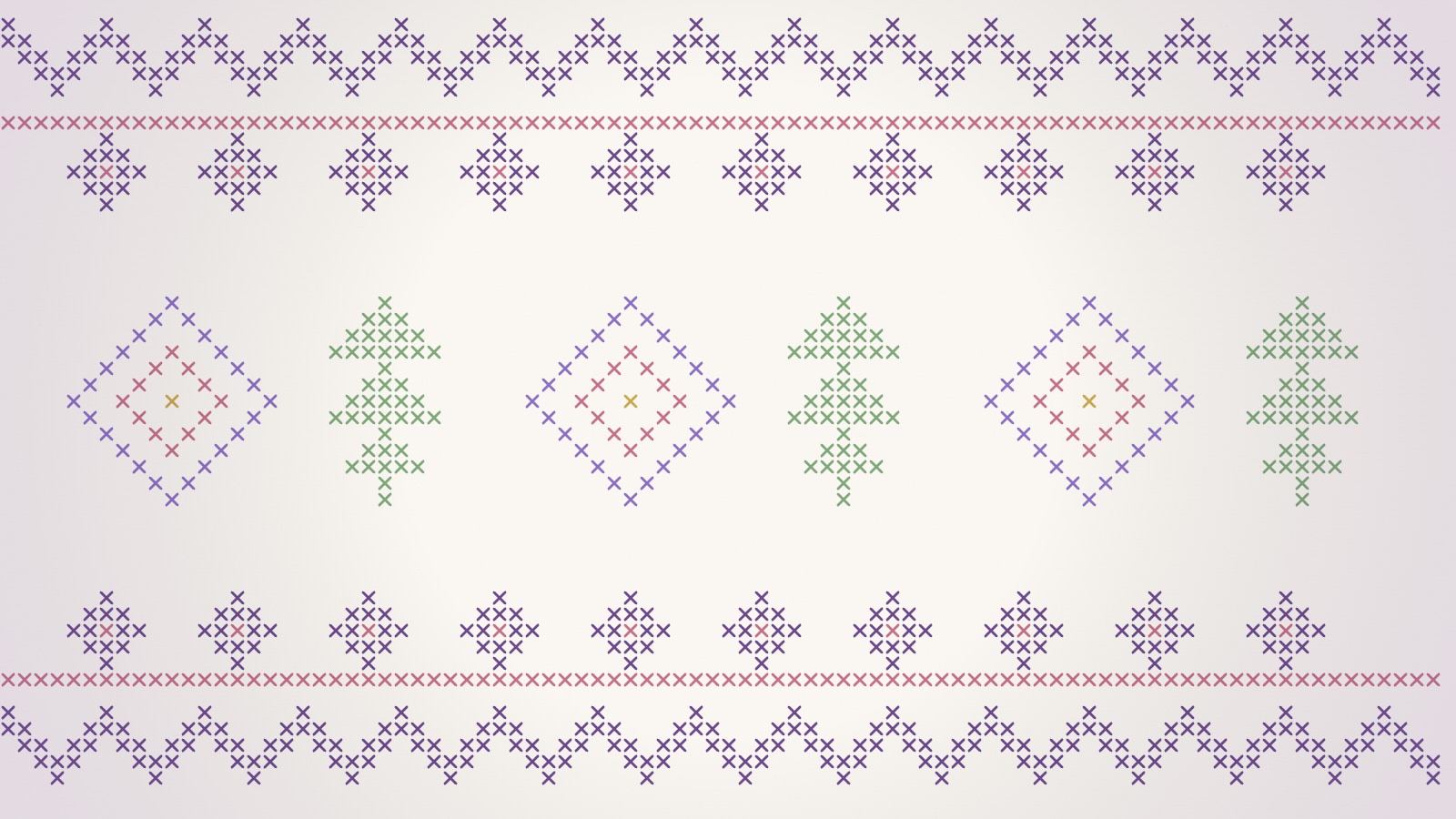
Tatreez is the Arabic word for embroidery; in the Palestinian context it denotes specifically the counted cross-stitch (fallahi), the couched silk-and-metallic stitch (tahriri), and the patchwork (tashreem) traditions practised by women to adorn the thobe (long dress), taqsireh (short jacket), shatweh (headdress), and other textiles of the household trousseau. As Tania Tamari Nasir and Widad Kawar explain in Palestinian Embroidery (1992), “fallah means farmer, village worker, tiller of the soil. The cross-stitch assumed the name fallahi because it was the stitch embroidered by the fallaha, the Palestinian farm woman” (Nasir & Kawar, 1992).
In December 2021, UNESCO inscribed “The Art of Embroidery in Palestine, Practices, Skills, Knowledge and Rituals” on the Representative List of the Intangible Cultural Heritage of Humanity, formally recognising tatreez as a living practice transmitted primarily from mother to daughter (UNESCO, 2021). The designation followed decades of scholarship arguing that embroidery functioned as “a language as much as a craft” (Palestinian Museum, 2025; Victoria and Albert Museum, 2024).
4.1 Northern Regional Styles
Regional variation is the defining feature of pre-1948 Palestinian embroidery. Each village maintained a repertoire of motifs, cypress trees (saru), tents of the pasha (khayyam al-basha), rosettes, moons, feathers, birds, S-shapes, and amulets, that together identified the wearer’s place of origin, marital status, and economic standing (Kawar & Nasir, 1992; Weir, 1989/2009). In the north, several distinct sub-regions are documented:
4.1.1 Nablus and the Jabal Nablus villages
Weir records that “women’s dresses from villages in the Nablus area were the least ornate in the whole of Palestine. Cross-stitch was not used much, the women preferring patchwork patterns of diamond and rectangular shapes, as well as other embroidery techniques” (Weir, 1989/2009). This relative restraint is often attributed to the Nablus region’s closer affiliation with Damascene urban dress fashions rather than with the fellahin village aesthetic of the Judean hills. The 1860s traveller H. B. Tristram described costumes in northern villages such as al-Bassa and Isfiya as “plain, patched, or embroidered in the most fantastic and grotesque shapes,” underscoring the emphasis on applied patchwork and geometric appliqué (Tristram, 1865; Weir, 1989/2009).
4.1.2 The Galilee: the Jellayeh and the Silk Patchwork
The Galilee produced one of the most distinctive Palestinian women’s garments: the jellayeh, an open coat-dress of silk patchwork pieces often sourced from Damascus and Aleppo, worn over a plain under-dress. The Victoria and Albert Museum’s 2024 exhibition Thread Memory featured a Galilean silk patchwork jellayeh as one of six canonical examples of historic Palestinian dress, alongside Bedouin and Bethlehem thobes (V&A, 2024). Galilean embroidery made less use of dense cross-stitch panels than southern styles; instead, it relied on applied cord, couched silk, and intricate piecework, techniques learned in part from exchange with Syrian and Lebanese Christian and Druze communities (Weir, 1989/2009; Kawar, 2011).
4.1.3 Tulkarm, Jenin, and the Plain Thobe Tradition
The thobes of Tulkarm and Jenin were traditionally dark-coloured, of plain or minimally embroidered coarse linen or cotton, consistent with the utilitarian agricultural labour of northern fellahin women. Contemporary accounts note that the traditional costumes of Tulkarm women “were plain, dark-coloured gowns with or without embroidery, as most rural women were from the north of Palestine. Today, embroidery is the main source of income for the women of the city” (Tulkarm Municipality cited in open sources). The most popular modern embroidered images produced in Tulkarm depict maps of historic Palestine, an evolution from village-identifier to national-identifier that is characteristic of post-1948 tatreez.
4.2 Materials and Transmission
Before the introduction of industrial threads in the early twentieth century, northern Palestinian embroidery used silk threads dyed with locally produced vegetable colourants. The Galilee was one of the principal zones of indigo (nila) and sumac (summaq) cultivation used to produce the blue and red dyes prized in embroidery across Palestine. Cotton was grown in the Galilee, silk was imported from the Syrian centres of Homs and Aleppo, and linen came from Egypt, making the Galilee a key node in an integrated Levantine textile corridor (Nöl Collective, 2021). European colour-fast DMC threads were introduced in the 1860s by missionary schools and, crucially, only gradually replaced vegetable-dyed silks; the shift is often treated as a historical turning point in the evolution of northern Palestinian embroidery (Weir, 1989/2009; Munayyer, 2011).
Girls typically began embroidery lessons between the ages of six and eight. Jeni Allenby’s paper presented to the Textile Society of America records: “Historically both Palestinian bedouin and village fellahin women made their own costumes, learning to embroider as early as the age of eight. Embroidery played an important part in village life, and was thought to reveal a woman’s character and personality as well as reflecting her economic status” (Allenby, 2002, p. 2). Embroidery sessions were social: women gathered in courtyards or front rooms, sharing threads and patterns across households. The Palestinian embroiderer Jamileh Salim, interviewed for the Inaash cooperative in Lebanon, described this vanished social form: “In Palestine, the women would gather together to embroider, usually in front of their houses. They would put a basket in the middle with their balls of thread and start to work, a word here and a word there, a stitch here and a stitch there. That’s how it had been for centuries. Now we sit inside our houses in summer and inside in winter” (Maharam/Rawsthorn, n.d.).
4.3 Motif and Meaning
Motifs carried both aesthetic and apotropaic functions. The tree of life (shajarat al-hayat), the cypress, and the eight-pointed star are among the most widely distributed; the Met’s 2024 essay notes that medieval embroidered motifs from the Qadisha Valley, dating to 1283 CE, “bear a striking resemblance to the motifs on Palestinian dresses during the nineteenth and twentieth centuries” and are believed to have functioned as protections against “evil, envy, and sickness” (Met Museum, 2024). As a published authority on this topic has observed, names of motifs shifted between villages and generations: “What is a moon in Ramallah is a star in Hebron, and an orange branch to a grandmother is a rose branch to the granddaughter” (Skinner & Kawar, 2014; cited in This Week in Palestine, 2022).
5. Household Pottery and the Lost Women’s Ceramic Tradition
Pottery is among the oldest documented crafts of Palestine, with a material record reaching back to the Neolithic period (ca. 5500 BCE). The Wikipedia-curated overview of Palestinian pottery, drawing on archaeological syntheses, notes that two production traditions coexisted into the twentieth century: men produced wheel-thrown pottery in urban and semi-urban workshops (for example, the Fakhouri family workshop in Jaba’ near Jenin, which has operated for more than 300 years), while women produced hand-coiled household wares at home, typically fired in open charcoal kilns (Palestinian Pottery, 2024; This Week in Palestine, 2021).
The northern hill-country villages of al-Jib (biblical Gibeon), Beitin (Bethel), Sinjil, and Jaba’ near Jenin were significant centres of this coiled household production, which supplied cooking pots, jugs (ibriq), mugs, water storage jars (zir), and plates to the rural economy. Clay was often sourced from the Jenin area, which is distinguished by a characteristic yellow colour; this same clay supplied the mould-cast tiles of the Armenian ceramics workshops that emerged in Jerusalem after 1919 (Encyclopedia of Crafts WCC-APR, n.d.).
Crucially, the women’s pottery tradition has almost entirely disappeared. As the Wikipedia synthesis summarises, “the pottery traditions have suffered from the Nakba and the encroachment of modern life and mass-produced household goods and wares, which effectively ended the women’s pottery tradition” (Palestinian Pottery, 2024). Where men’s workshop-based ceramic production has continued (notably in Hebron, but also in Jaba’ near Jenin), the women’s domestic coiled tradition has been replaced by industrial plasticware and imported metal cookware. In the northern governorates today, almost no Palestinian woman produces coiled pottery commercially; the last documented female practitioners in villages of the Nablus hills were recorded by folklorists in the 1970s and early 1980s (Amiry & Tamari, 1989).
A small contemporary renewal is emerging through individual artist-ceramicists rather than through the revival of the domestic coiled tradition. Dina Ghazal of Nablus, whose abstract ceramic practice is referenced in the Levantine pottery literature, is one example of a woman engaging with the ceramic medium on artistic rather than utilitarian terms (Levantine Pottery, 2024).
6. Basketry, Straw Work, and the Qash Economy
In the agricultural villages of northern Palestine, women made baskets and trays (tabaq, saniya) from qash (wheat stalks), palm fronds, and olive twigs gathered from their fields. The Heinrich-Böll-Stiftung’s Palestine office records that “in the agricultural villages of the north, fellaheen women made baskets and trays with qash (wheat stalks) and olive twigs from their surroundings,” and that this production was largely for domestic use rather than market sale (Heinrich-Böll-Stiftung, 2021).
The saniya, a broad circular woven tray used to serve bread, vegetables, and dried herbs, is the emblematic object of this tradition. Women dyed wheat stalks with natural colourants, often red from madder or pomegranate rind and black from iron-soaked oak galls, and wove them in concentric spirals. Baskets were also used to carry the harvest home, store dried mulukhiyya and za’atar for the winter, and present the henna at weddings. Straw work was so embedded in the gendered domestic economy that it was often passed through the matriline but rarely professionalised.
A 2023 Haaretz feature documents Mohammed Zeitoun of the Galilean village of Najaf as “the only craftsperson in Israel who still weaves using wheat stems, like Palestinian women used to do before him,” a practice he learned from his grandmother (Haaretz, 2023). That the one surviving continuous practitioner in the Galilee is a man who inherited the skill from a woman speaks both to the craft’s near-extinction and to its enduring matrilineal pedagogy. In Gaza and Dair al-Balah, the artisan Umm Yusef (documented by Handmade Palestine) still grows her own wheat, dyes it herself, and weaves saniya for sale (Handmade Palestine, n.d.).
Today, in the northern West Bank, straw-work and basketry survive primarily through cooperative revival efforts. In Kufr Manda in the Galilee, the Sindyanna of Galilee organisation, an Arab-Jewish fair-trade cooperative, operates a basket-weaving centre that trains village women, with the explicit goal of providing “a skill and make some money without having to leave the village (and often not even the house)” (Sindyanna of Galilee, n.d.). At the Bethlehem Fair Trade Artisans (BFTA) Craft Village, northern and central West Bank women demonstrate basket-weaving and bread-making to visitors (BFTA, n.d.).
7. The Nabulsi Soap Industry and Women’s Labour
The single most internationally visible northern Palestinian craft is Nabulsi soap, an olive-oil based hard soap produced in the city of Nablus and recognised in December 2024 by UNESCO on the List of Intangible Cultural Heritage in Need of Urgent Safeguarding (UNESCO, 2024). Though the large-scale soap factories of the city are male-operated, women’s historical role in this craft is fundamental and under-studied.
As the authoritative encyclopaedic entry on Nabulsi soap documents, the craft “was traditionally made by women for household use, even before the appearance of small soap-making factories in the 10th century” (Nabulsi Soap, 2025). Palestinian women set aside a portion of each year’s olive harvest for the production of household soap, a practice described by the Institute for Middle East Understanding as having continued “for well over one thousand years” (IMEU, n.d.). Women also historically dominated subsidiary roles in the commercial trade, particularly in packaging and selling, and in small family-run soap operations that continue to produce limited annual batches (Handmade Palestine, 2025).
7.1 Historical Scale and Statistics
In 1907, Nablus had 30 soap factories producing nearly 5,000 tons of soap annually, over half of all soap production in Palestine (Bontemps, 2012; Nabulsi Soap, 2025). The nineteenth-century English traveller John Bowring wrote that Nabulsi soap was “highly esteemed in the Levant,” and the Syrian historian Muhammad Kurd Ali in the 1930s called it “the best and most famous soap today” (Bowring, 1840; Kurd Ali cited in Nabulsi Soap, 2025). Between 1907 and 1930, the number of factories declined to 16, and by the eve of World War I, 29 factories were producing between 2,400 and 2,640 tons annually (Sharif, 1999; Palestinian Soap Cooperative, 2023).
The decline accelerated dramatically after 1948 and especially after 1967. Bontemps (2012) documents that the Second Intifada (2000–2005) was a severe blow: “Two old soap factories were totally destroyed in the old city of Nablus” and annual exportation dropped “from 1,200 to 700 or 800 tons per year.” In 2008, only two factories remained operational in the Old City; by December 2022, at least five al-masaben had resumed production, though at a fraction of their pre-2000 capacity (Nabulsi Soap, 2025; Palestinian Soap Cooperative, 2023). The 2008 testimony of the general manager of the Touqan factory, cited by the UN Office for the Coordination of Humanitarian Affairs, records: “Before 2000, our factory used to produce 600 tons of soap annually. Due to the physical and economic obstacles we face now because of the Israeli occupation, and especially the checkpoints, we produce barely half that amount today” (OCHA/Nabulsi Soap, 2025).
7.2 Women, Domestic Soap, and Contemporary Cooperatives
The UNESCO 2024 inscription explicitly recognised the industry’s historical provision of “livelihoods for Palestinian families, particularly women who worked as artisans and sellers” (Handmade Palestine, 2025). Contemporary cooperatives such as the Palestinian Soap Cooperative (Nablus) aggregate output from multiple family factories and small women’s workshops, exporting under fair-trade principles. Women in villages surrounding Nablus, including ‘Asira al-Shamaliyya, Sebastia, and Burin, continue to produce olive-oil soap in small batches for home use and local sale, keeping the domestic variant of the craft alive.
8. Weaving, Dyes, and the Majdalawi-Galilean Textile Corridor
Before the 1948 Nakba, northern Palestine was part of an integrated Levantine textile and dye economy. Cotton was cultivated in the Galilee and around the Hula plain; silk was imported from Syria and reworked locally; and indigo (nila) and sumac (summaq) were grown in the Galilee and exported for dyeing across Palestine. In the coastal city of al-Majdal, historically connected to the northern supply networks, more than five hundred single-treadle looms produced Majdalawi, an indigo-dyed cotton and silk fabric with characteristic vertical stripes. Though the city itself lies to the south of the core “northern” region, the Majdalawi fabric depended on indigo and sumac sourced from the Galilee, making the two zones inseparable in practice (Heinrich-Böll-Stiftung, 2021; Nöl Collective, 2021).
In the aftermath of 1948, the Majdal weavers were expelled to the Gaza Strip; the al-Najada Association and later the Atfaluna Crafts project preserved the Majdalawi loom tradition in exile, but the northern dye corridor collapsed almost entirely. The contemporary writer and editor at the Met notes that “over the past nine months, the historic looms of al-Majdal have been destroyed; the weavers’ fates are unknown,” referring to the 2023–2024 war on Gaza and its effects on the displaced Majdalawi community (Met Museum, 2024).
Bedouin women in the Jordan Valley near Tubas and Jericho maintained, and to some extent still maintain, a separate tradition of pile-weaving on ground looms, using sheep, goat, and camel wool to produce tent panels (bayt sha‘r), rugs, and saddle-bags. The Heinrich-Böll-Stiftung documentation emphasises that “Bedouin women in the Naqab (Negev), Jordan Valley and Tiberias areas wove sheep, goat, and camel wool into tents, rugs, and ornaments” (Heinrich-Böll-Stiftung, 2021).
9. Dispossession and Rupture: 1948, 1967, and the Intifadas
Three major political ruptures reshape any account of northern female artisans:
9.1 The 1948 Nakba
The displacement of approximately 700,000 Palestinians in 1948, including the inhabitants of over five hundred villages, destroyed the regional specificity of dress and craft production (Morris, 2004; Khalidi, 1992). As the Met’s authoritative tatreez essay describes it, “the geographically specific embroidery and dressmaking techniques were no longer practised, as women began sharing their patterns with one another amid the diverse and displaced populations now living in refugee camps. Many Palestinian women could no longer afford the specialised supplies required for tatreez, or the silks, beads, and coins that adorned the thobe” (Met Museum, 2024). A new post-Nakba pan-Palestinian embroidery emerged in the refugee camps of Lebanon, Jordan, Syria, and the West Bank: the six-branch dress of the 1950s–1960s, named for its six vertical aruq (branches) in the skirt, drew motifs from multiple pre-1948 village traditions without locating them in any one place.
9.2 The 1967 Occupation and the Intifada Dress
The 1967 occupation of the West Bank and Gaza Strip, and later the First Intifada (1987–1993), reshaped tatreez into an explicitly political medium. During the First Intifada, Israeli authorities banned the public display of the Palestinian flag; Palestinian women responded by embroidering the banned flag and its colours into their thobes, producing what became known as the Intifada dress (Dedman, 2017; Bayt al-Fann, 2023). Rachel Dedman describes these garments as “sites of active political power, engaging in this explicitly political moment, making tatreez with a view to being seen” (Dedman, interviewed in CNN, 2026).
9.3 The Second Intifada and Post-2023 War
The Second Intifada (2000–2005) brought the most sustained material damage to northern Palestinian craft infrastructure of any twentieth-century episode. In Nablus, Israeli military incursions destroyed several old soap factories in the historic quarter; annual production dropped by 40–50% (OCHA cited in Nabulsi Soap, 2025). The 2023–2024 war on Gaza and the accompanying West Bank operations have further disrupted craft economies: the Sunbula fair-trade shop in Jerusalem reported “a drop in footfall because of evacuation orders,” and the historic looms of al-Majdal’s displaced weaving community were destroyed (Jerusalem Story, 2024; Met Museum, 2024).
10. Cooperatives and Contemporary Economic Empowerment
Since the late Ottoman period, Palestinian women’s associations have combined charitable, educational, and craft-producing functions. Allenby (2002) notes that “the women’s movement began in the early years of the 20th century. Mainly social and charitable organisations with humanitarian objectives were established at that time, which contributed greatly in promoting the role of Palestinian women in the educational, social, economic and political spheres. By the 1980s many women had became more involved with political and national issues through these various Women’s Committees.” By the post-Oslo period, the explicit focus of many of these organisations had shifted toward craft production as income generation (Allenby, 2002).
10.1 Cooperatives in the Northern West Bank
The Baita Cooperative near Nablus, supported by UN Women’s Fund for Gender Equality and the Bisan Centre for Research and Development, has enabled women such as Khitam Sameeh, married at fifteen, mother of five, to generate independent monthly income through the production of local sweets and preserves for sale (UN Women, 2012). A 2012 UN Women report documents that this partnership “empowered 1,000 women between 2010 and 2011” across six existing and two newly established cooperatives in the West Bank (UN Women, 2012).
Other northern-region initiatives include: the Women’s Union of Tulkarm, which operates embroidery workshops producing the now-iconic “Map of Palestine” thobes; the Nablus-based Palestinian Soap Cooperative; the Rozana Association, headquartered in Birzeit but serving the northern villages, which supports women in the olive-oil, soap, and food-processing sectors; and numerous village-based zajal (collective) embroidery circles that feed into regional fair-trade distributors such as Sunbula, Hadeel, and Handmade Palestine.
10.2 Northern Galilee Cooperatives
Inside Israel, Sindyanna of Galilee, founded in 1996 and based in the Lower Galilee, is an Arab-Jewish women-led fair-trade cooperative producing olive oil, za’atar, honey, and basket-weaving. Sindyanna operates a visitor centre in Kufr Manda and distributes products internationally through Fairtrade International certification (Sindyanna, n.d.).
10.3 Refugee-camp Cooperatives (Descendants of Northern Villages)
Inaash al-Mukhayyam (Inaash), founded in Beirut in 1969, has trained and employed over 2,000 Palestinian refugee women in Lebanese camps over fifty years, including descendants of families from the Galilee villages of Saffuriyya, al-Shajara, and Tarshiha (Inaash, n.d.; Maharam/Rawsthorn, n.d.). The cooperative currently employs approximately 400 women and has partnered with artists such as Mona Hatoum on the acclaimed Twelve Windows (2012–2013) series, exhibited at the Centre Pompidou, Tate Modern, and the Museum of Fine Arts, Houston. The Surif Women’s Cooperative (founded 1950 by Mennonite volunteers, reorganised in 1983) in the Bethlehem-Hebron hills employs refugee women many of whom trace ancestry to northern villages (Surif Women’s Cooperative, n.d.).
In Gaza, the UNRWA Sulafa Embroidery Project, established in 1950, employs 400 women across eight refugee camps, many of whom descend from northern coastal villages around al-Majdal and Jaffa. The women earn an average of US $40 per month from embroidery, a significant contribution in an economy where more than 45% of the population lived below the poverty line even before 2023 (UNRWA Sulafa cited in Palestine Center for Peace, n.d.).
11. Statistical Portrait of Palestinian Women in the Craft Economy
Statistical data on Palestinian female artisans specifically is limited, but broader data on women’s economic participation, collected by the Palestinian Central Bureau of Statistics (PCBS), UN Women, the ILO, and FEMISE, allows us to contextualise the craft sector.
11.1 Labour-Force Participation
According to UN Women’s Palestine office, women in the occupied Palestinian territory comprised only 15% of the local work force in 2015, one of the lowest rates of female labour-force participation globally (UN Women/SDG Fund, 2019). Between 2005 and 2017, female unemployment rose to 25.2%, while the equivalent rate for men fell by 1.5 percentage points (UN Women, 2019, citing PCBS 2017). In 2017, the average daily wage of Palestinian women was 84.6 New Israeli Shekels (NIS), approximately 70% of the male daily wage of 119.6 NIS (UN Women, 2019). Only 3.5% of working-age women (15–64) had established their own businesses, compared to 16% of working-age men. In total, Palestine hosted approximately 7,000 women-owned businesses as of the 2017 reporting (UN Women, 2019).
11.2 The Craft Sector in Particular
The 2026 FEMISE policy brief Women and Youth Empowerment in the Palestinian Labor Market identifies handicrafts as one of three priority sectors for Palestinian women’s economic empowerment (alongside food industries and ICT). The brief finds that cooperative models are the most effective vehicle for women’s craft-based empowerment, but that “structural constraints”, weak legal frameworks for entrepreneurship, limited finance, and persistent social norms restricting women’s leadership, continue to limit growth (FEMISE, 2026).
11.3 Income from Traditional Embroidery
Women employed by the UNRWA Sulafa Embroidery Project earn an average of US $40 per month, working on pieces that can require over 100 hours of labour per scarf (Palestine Center for Peace, n.d.). At the Sindyanna of Galilee cooperative and most West Bank embroidery circles, daily earnings are similarly modest but, in combination with other household income, provide an essential and often sole cash contribution to rural families (Sindyanna, n.d.; UN Women, 2012).
11.4 Heritage Listings
Two formal UNESCO recognitions frame the current policy environment: (i) The Art of Embroidery in Palestine was inscribed on the Representative List of Intangible Cultural Heritage in December 2021; (ii) The Tradition of Nabulsi Soap-Making was inscribed on the List of Intangible Cultural Heritage in Need of Urgent Safeguarding in December 2024 (UNESCO, 2021; UNESCO, 2024). Both recognitions explicitly cite the centrality of women to these crafts’ practice and transmission.
12. Case Studies of Northern Artisans and Organisations
12.1 Umm Yusef, Basket Weaver
Documented by the fair-trade distributor Handmade Palestine, Umm Yusef grows her own wheat, dyes it herself with natural colourants, and weaves saniya plates and baskets that are sold internationally. She is one of a handful of continuing practitioners of the pre-industrial wheat-straw tradition in historic Palestine (Handmade Palestine, n.d.).
12.2 Manal Darwish, Ceramicist
Resident of the Aida refugee camp, northern Bethlehem, Manal Darwish produces hand-painted ceramic vases adapted from traditional Hebron patterns. Her work is distributed through the Love Welcomes “Handcrafted in Palestine” range (Love Welcomes, 2024). As the Love Welcomes coordinator Rasha Salsaa has stated of the programme: “We wanted another way of presenting ourselves to the world as Palestinians. We want to introduce our culture, heritage, humanness, creativity, talents and beautiful minds to people everywhere” (Love Welcomes, 2024).
12.3 Dina Ghazal, Abstract Ceramicist of Nablus
Part of a new generation of female Palestinian ceramic artists, Ghazal works in abstraction rather than in the utilitarian household coiled tradition. Her practice represents one strand of the contemporary renewal of female Palestinian ceramic art (Levantine Pottery, 2024).
12.4 Women in Hebron and the Nablus-Hebron Fair-Trade Axis
Though headquartered in the southern West Bank, the Women in Hebron cooperative, approximately 150 women producing embroidered handbags, thobes, scarves, and wallets, supplies northern West Bank retail markets and cooperates with Nablus-based soap producers to create joint gift sets (Institute for Palestine Studies, 2021; Women in Hebron, n.d.).
12.5 Darzah and Northern Training Networks
Darzah, a project of the Child’s Cup Full non-profit, employs refugee and low-income women across the West Bank, including those in the Nablus-Balata refugee camp, to produce tatreez shoes, bags, and accessories. Each purchase contributes directly to artisan salaries, employment programmes, and job training in the West Bank (Darzah, n.d.).
13. Challenges: Occupation, Market, and Generational Transmission
The challenges facing northern Palestinian female artisans can be grouped under three headings.
13.1 Political and Infrastructural
The Israeli occupation and its associated movement restrictions, checkpoints, the separation barrier, and military closures, have dramatically raised the cost of production and transport for artisan communities. OCHA data cited in multiple sources record a tenfold increase in the cost of transporting goods from Nablus since the imposition of the closure regime in 2000 (OCHA cited in IMEU, n.d.). Direct destruction of craft infrastructure, soap factories, weaving workshops, and embroidery production units, has occurred in every major Israeli military operation since 1987.
13.2 Market and Economic
Northern craft production competes with mass-manufactured imports from China and Turkey, whose pricing cannot be matched by labour-intensive hand production. The lack of legal protection for the “Nabulsi” designation has historically enabled counterfeit production in Egypt, Syria, and elsewhere (Bontemps, 2012). UNESCO’s 2024 urgent safeguarding listing of Nabulsi soap explicitly identifies these economic pressures as threats to the craft’s survival.
13.3 Generational Transmission
The gap between traditional skill and contemporary youth interests is the most profound long-term challenge. As one reviewer of Kawar’s Threads of Identity observed, “The art of Palestinian embroidery is disappearing fast. Young Palestinian women no longer make embroidered dresses and the culture is dying despite the best efforts of many organisations to try to keep it alive” (Amazon reviewer cited in Kawar, 2011). Nonetheless, parallel revivals, digital tatreez kits, social-media based pattern sharing (e.g., The Thobe Project, Tatreez and Tea), and diaspora-led fashion houses such as Nöl Collective, Darzah, Trashy Clothing, and the London-based Ayham Hassan practice, are generating a new, internationalised audience for northern Palestinian craft (CNN, 2026; Nöl Collective, 2021).
14. Conclusion
The female artisans of northern Palestine constitute a living cultural-economic system that has survived Ottoman decline, British Mandate disruption, the Nakba, the 1967 occupation, and two Intifadas. Their work, in tatreez, coiled pottery, wheat-straw weaving, Nabulsi soap, dyed textile production, and wool basketry, has been the subject of one of the most sustained bodies of ethnographic scholarship produced in the modern Middle East, anchored by the monumental contributions of Shelagh Weir, Widad Kawar, Hanan Munayyer, Tania Tamari Nasir, Rachel Dedman, Véronique Bontemps, and Beshara Doumani.
The austere aesthetic that Weir identified as characteristic of Nablus-area dress is not poverty but a distinctive regional language, one embedded in the agricultural rhythms of the northern hill country and the urban-commercial orientation of Nablus itself. The contemporary moment is defined by twin pressures: continuing political and military destruction of craft infrastructure on the one hand, and, on the other, a remarkable renaissance anchored in UNESCO safeguarding, cooperative mobilisation, diaspora fashion, and digital revival. The story is neither one of loss nor one of triumph, but one of sumud, steadfast persistence, in which the needle, the loom, the clay, the wheat stalk, and the soap cube have continued, across a century of rupture, to bind Palestinian women to their land, their history, and one another.
15. References
Books and Monographs
Amiry, S., & Tamari, V. (1989). The Palestinian Village Home. British Museum Publications.
Bontemps, V. (2012). Ville et patrimoine en Palestine: Une ethnographie des savonneries de Naplouse. Paris: Karthala/IISMM.
Bowring, J. (1840). Report on the Commercial Statistics of Syria. London: William Clowes and Sons.
Dedman, R. (2017, revised 2023). At the Seams: A Political History of Palestinian Embroidery. Beirut: Dar El Nimer / The Palestinian Museum.
Doumani, B. (1995). Rediscovering Palestine: Merchants and Peasants in Jabal Nablus, 1700–1900. Berkeley and Los Angeles: University of California Press.
Graham-Brown, S. (1982). “The Political Economy of the Jabal Nablus, 1920–1948.” In R. Owen (ed.), Studies in the Economic and Social History of Palestine in the Nineteenth and Twentieth Centuries. Carbondale: Southern Illinois University Press.
Granqvist, H. (1931). Marriage Conditions in a Palestinian Village. Helsingfors: Societas Scientiarum Fennica.
Jaussen, A. (1927). Naplouse et son district. Paris: Geuthner.
Kawar, W. K. (2011). Threads of Identity: Preserving Palestinian Costume and Heritage. Nicosia: Rimal Publications / Melisende.
Kawar, W. K., & Nasir, T. T. (1992). Palestinian Embroidery: Traditional “Fallahi” Cross-Stitch. Munich: Staatliches Museum für Völkerkunde.
Kawar, W. K., & Weir, S. (1975). Costumes and Wedding Customs in Bayt Dajan. Palestine Exploration Quarterly, 107, 39–52.
Khalidi, W. (1992). All That Remains: The Palestinian Villages Occupied and Depopulated by Israel in 1948. Washington, D.C.: Institute for Palestine Studies.
Morris, B. (2004). The Birth of the Palestinian Refugee Problem Revisited. Cambridge: Cambridge University Press.
Munayyer, H. K. (2011). Traditional Palestinian Costume: Origins and Evolution. Northampton, MA: Interlink Books.
Nasir, T. T., Nasser-Khoury, O. J., & Yamada, S., with Kawar, W. K. (2021). Tatreez and Tahriri: A Guide to Palestinian Embroidery. Birzeit: Birzeit University Museum.
Rajab, J. S. (1989). Palestinian Costume. London: Kegan Paul International.
Said, E. W., with J. Mohr (1986). After the Last Sky: Palestinian Lives. New York: Pantheon.
Sharif, H. (1999). Sina‘at al-sabun al-Nabulsi [The Nabulsi Soap Industry]. Nablus: Municipality of Nablus.
Skinner, M., & Kawar, W. K. (2014). Palestinian Embroidery Motifs: A Treasury of Stitches, 1850–1950. London: Melisende.
Stillman, Y. K. (1979). Palestinian Costume and Jewelry. Albuquerque: University of New Mexico Press.
Tristram, H. B. (1865). The Land of Israel: A Journal of Travels in Palestine. London: Society for Promoting Christian Knowledge.
Weir, S. (1970). Palestinian Embroidery. London: British Museum Press.
Weir, S. (1970). Spinning and Weaving in Palestine. London: British Museum Press.
Weir, S. (1989; reprinted 2009). Palestinian Costume. London: British Museum Publications / Austin: University of Texas Press.
Weir, S., & Shahid, S. H. (1988). Palestinian Embroidery: Cross-Stitch Patterns from the Traditional Costumes of the Village Women of Palestine. London: British Museum Press.
Articles and Scholarly Papers
Allenby, J. (2002). “Re-inventing Cultural Heritage: Palestinian Traditional Costume and Embroidery since 1948.” Textile Society of America Symposium Proceedings, Paper 370. Lincoln: University of Nebraska.
Bontemps, V. (2012). “Soap-Factories in Nablus: Palestinian Heritage (Turāth) at the Local Level.” Journal of Balkan and Near-Eastern Studies, 14(2), 279–295.
Di Cesari, C. (2008). “Cultural Heritage beyond the ‘State’: Palestinian Heritage between Nationalism and Transnationalism.” PhD dissertation, Stanford University.
Esim, S., & Omeira, M. (2009). “Social Protection and the Challenge of Women’s Empowerment in the Arab Region.” ILO Regional Office for the Arab States, Beirut.
Fisher, J. (n.d.). Review of Threads of Identity. Journal of Palestine Studies.
Kassem, W. (2024, July 26). “Tatreez in Time.” The Metropolitan Museum of Art: Perspectives. https://www.metmuseum.org/perspectives/tatreez-in-time.
Palestinian Central Bureau of Statistics (PCBS). (2017, March 8). The Eve of the International Women’s Day [Press release]. Ramallah: PCBS.
Palestinian Central Bureau of Statistics (PCBS). (2014b). Labour Force Survey: Annual Report. Ramallah: PCBS.
Reports and Institutional Publications
FEMISE. (2026, January). Policy Brief 16: Women and Youth Empowerment in the Palestinian Labor Market, Addressing Challenges and Unlocking Potentials. Marseille: FEMISE.
International Labour Organization (ILO). (2014). Towards Gender Equality and Women’s Empowerment in the Occupied Palestinian Territory. Beirut: ILO Regional Office for the Arab States.
Sustainable Development Goals Fund (SDG Fund). (2019). Occupied Palestinian Territory: A One-Stop-Shop for Sustainable Women-Owned Businesses. New York: SDG Fund.
UN Women. (2012, August 21). “Making Profits, Changing Mindsets: Women’s Cooperatives Bring Social Change in the Occupied Palestinian Territories.” New York: UN Women.
UN Women Palestine. (2019, February). Women’s Economic Empowerment through Decent Work. Jerusalem: UN Women Palestine.
UN Women Palestine. (n.d.). Facts and Figures: Economic Empowerment. https://palestine.unwomen.org/en/what-we-do/economic-empowerment/facts-and-figures-0.
UNESCO. (2021). The Art of Embroidery in Palestine: Practices, Skills, Knowledge and Rituals, Representative List of the Intangible Cultural Heritage of Humanity. Paris: UNESCO.
UNESCO. (2024, December). Tradition of Nabulsi Soap-Making in Palestine, List of Intangible Cultural Heritage in Need of Urgent Safeguarding. Paris: UNESCO.
United Nations Secretary-General. (2019). Situation of and Assistance to Palestinian Women: Report of the Secretary-General. A/HRC/40/36. New York: United Nations.
UNRWA. (n.d.). Sulafa Embroidery Project: Gaza Refugee Camps. Gaza: UNRWA Social Services Programme.
Digital and Museum Resources
Bayt al-Fann. (2023, April 26). “The Art of Tatreez, Palestinian Embroidery.” https://www.baytalfann.com/post/the-art-of-tatreez-palestinian-embroidery.
Bethlehem Fair Trade Artisans (BFTA). (n.d.). Craft Village. https://bethlehemfairtrade.org/craft-village/.
CNN Style. (2026, February 14). “Tatreez explained: Why Palestinian Women are Preserving this Embroidery.” https://www.cnn.com/2026/02/14/style/tatreez-why-palestinian-women-are-preserving-this-embroidery.
Darzah / Child’s Cup Full. (n.d.). Ethical Fashion from Palestine. https://www.darzah.org/.
Encyclopedia of Crafts in WCC-Asia Pacific Region. (n.d.). Ceramics in Palestine. https://encyclocraftsapr.com/ceramics-4/.
Haaretz. (2023, July 12). “The Man Reviving Palestinian Women’s Weaving.” https://www.haaretz.com/middle-east-news/palestinians/2023-07-12/.
Handmade Palestine. (n.d.). “Palestinian Traditional Saniye, Hand Woven Straw Plate.” https://handmadepalestine.com/.
Handmade Palestine. (2022, May 26). “Traditional Embroidery: A Brief History of Palestinian Tatreez.” https://handmadepalestine.com/blogs/news/tatreez.
Handmade Palestine. (2025, January 12). “Palestinian Soap Making: Intangible World Heritage.” https://handmadepalestine.com/blogs/news/palestinian-soap-making-intangible-world-heritage.
Heinrich-Böll-Stiftung Palestine & Jordan. (2021, August 21). Cultural Heritage and Traditional Crafts. https://ps.boell.org/en/2021/08/21/cultural-heritage-traditional-crafts.
Inaash Association. (n.d.). About Us. https://www.inaash.org/pages/about-us.
Institute for Middle East Understanding (IMEU). (n.d.). “Nablus’ Olive Oil Soap: A Palestinian Tradition Lives On.” https://imeu.org/resources/life-and-culture/nablus-olive-oil-soap-a-palestinian-tradition-lives-on/326.
Institute for Palestine Studies. (2021, March 7). “Ten Brands From and For Palestinians.” https://www.palestine-studies.org/en/node/1651034.
Jerusalem Story. (2024). “Sunbula: The Fair-Trade Crafts Store Connecting Palestine to the World.” https://www.jerusalemstory.com/en/blog/sunbula-fair-trade-crafts-store-connecting-palestine-world.
Levantine Ceramics Project. (n.d.). “Palestine Pottery / Jerusalem Pottery.” https://www.levantineceramics.org/kilns/186-palestine-pottery-jerusalem-pottery.
Love Welcomes. (2024). Handcrafted in Palestine. https://www.lovewelcomes.org/blogs/news/handmade-in-palestine-shop-and-support-now.
Maharam / Rawsthorn, A. (n.d.). “The Story of Inaash.” https://www.maharam.com/stories/rawsthorn_inaash.
Nöl Collective. (2021, October 28). “Nol: Weaving Threads of Palestinian History.” https://nolcollective.com/blogs/news/nol-weaving-threads-of-palestinian-history-1.
Palestine Center for Peace (Australia). (n.d.). UNRWA Sulafa Embroidery Project. https://palestinecenterforpeace.com.au/pages/unrwa-sulafa-embroidery-project.
Palestine Center for Peace (Australia). (n.d.). Surif Women’s Cooperative. https://palestinecenterforpeace.com.au/pages/surif-womens-cooperative.
The Palestinian Museum. (2025). Thread Memory: Embroidery from Palestine (exhibition). Birzeit: The Palestinian Museum. https://palmuseum.org/en/exhibitions-and-events/exhibitions/thread-memory-embroidery-palestine.
Palestinian Soap Cooperative. (2023, April 14). Soap Making in Palestine. https://palestiniansoap.coop/blogs/news/soap-making-in-palestine.
Palquest (Interactive Encyclopedia of the Palestine Question). (n.d.). Nablus Soap Production. https://www.palquest.org/en/highlight/15993/nablus-soap-production.
Sindyanna of Galilee. (n.d.). Basket Weaving at the Visitors’ Center. https://www.sindyanna.com/.
Sunbula Fair Trade. (n.d.). Types of Palestinian Crafts. https://www.sunbula.org/en/category/52/Palestinian-Crafts.
Surif Women’s Cooperative (via Hadeel). (n.d.). https://www.hadeel.org/suppliers/surif-womens-cooperative/.
This Week in Palestine. (2021, May 13). “Make Clay Pots in 300-Year-Old Jaba’ Workshop.” https://thisweekinpalestine.com/make-clay-pots-in-300-year-old-jaba-workshop/.
This Week in Palestine. (2022, March 5). “A Selection of Palestinian Embroidery Books.” https://thisweekinpalestine.com/a-selection-of-palestinian-embroidery-books/.
Victoria and Albert Museum. (2024). “Tatreez: The Ancient Art of Palestinian Embroidery.” https://www.vam.ac.uk/articles/tatreez-the-ancient-art-of-palestinian-embroidery.
Women in Hebron. (n.d.). Our Values. https://womeninhebron.com/win/our-values.
Wikipedia contributors. (2025, December). “Nabulsi Soap.” Wikipedia. https://en.wikipedia.org/wiki/Nabulsi_soap.
Wikipedia contributors. (2024). “Palestinian Pottery.” Wikipedia. https://en.wikipedia.org/wiki/Palestinian_pottery.
Wikipedia contributors. (2025). “Palestinian Handicrafts.” Wikipedia. https://en.wikipedia.org/wiki/Palestinian_handicrafts.
Wikipedia contributors. (2026). “Tatreez.” Wikipedia. https://en.wikipedia.org/wiki/Tatreez.
Wikipedia contributors. (2025). “Tulkarm.” Wikipedia. https://en.wikipedia.org/wiki/Tulkarm.