Abstract
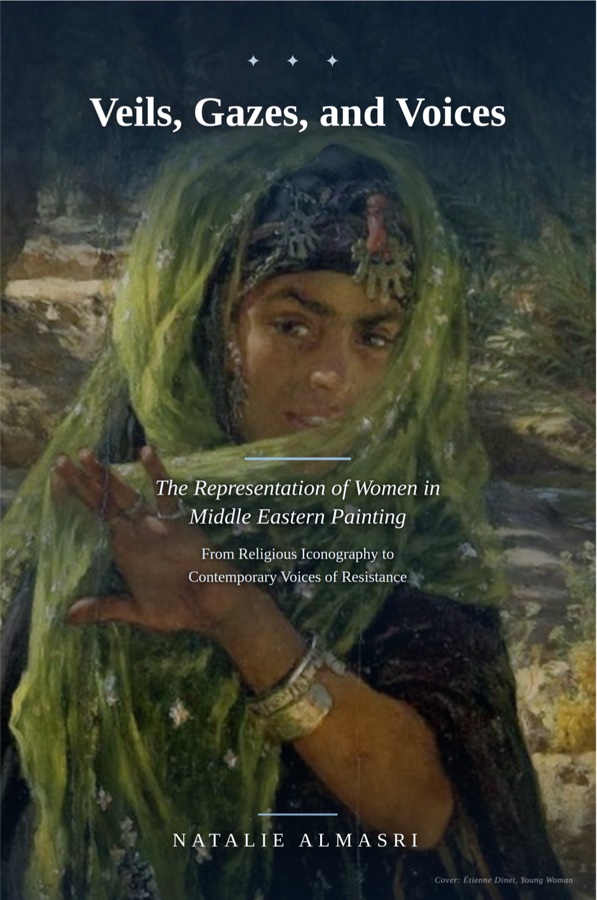
Veils, Gazes, and Voices examines nearly five centuries of the visual representation of women in Middle Eastern painting, from Safavid manuscript miniatures and Ottoman courtly portraiture, through the Orientalist canon of Vanmour, Gérôme, and Fabbi, to the modernist portraits of Mahmoud Said and the contemporary practice of artists working across Cairo, Tehran, Beirut, Ramallah, and the diaspora.
Expanded from a master's thesis defended at Università IUAV di Venezia, the book traces the veil, the harem, and the female nude as sites where theology, politics, and Western fantasy have repeatedly collided with women's own image-making. Moving between religious iconography, everyday life, and questions of gender and sexuality, it argues for a plural, historically attentive way of reading these images, neither dismissing Orientalist painting outright nor uncritically celebrating its contemporary heirs, and closes with an account of queer presence, the male gaze, and feminist counter-gazes in the region's visual culture today.